
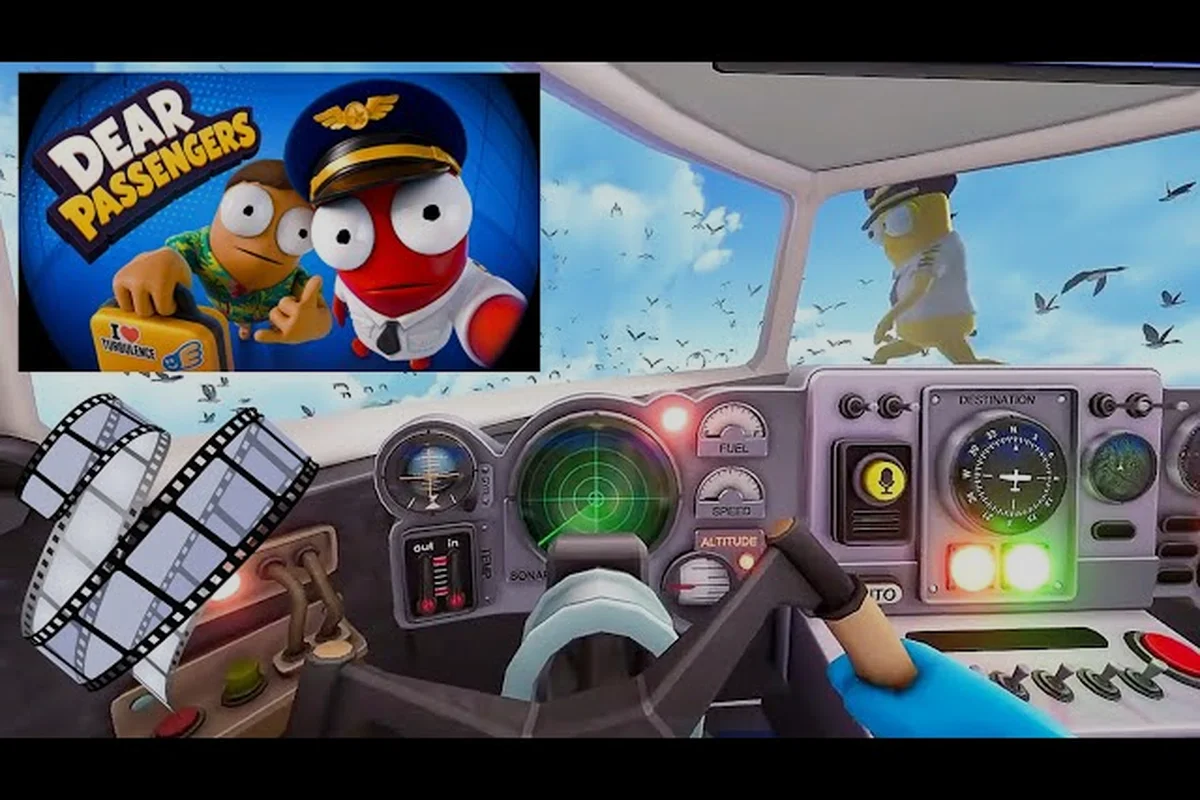
A cracked crate spilling across the cabin floor mid-bump is the fastest way to wipe out a fat Dear Passengers cargo reward, and learning how to prevent cargo damage in turbulence is the single highest-leverage skill a new crew can pick up before the first flight. The game, developed by FLEXUS and published under Steam app 4534960, pits a co-op airline crew against physics-based cabin chaos, dynamic weather, and air pockets that punish lazy strapping. This guide breaks down the hold layout, the strapping order, and the warning signs your pilot needs to call so the back of the plane stays mercifully quiet while the front takes the bumps. Players who master these habits early tend to bank the high-paying cargo contracts instead of constantly paying repair fees, and the difference shows up in the final tab.
How Turbulence and Cargo Damage Actually Connect
Dear Passengers ships with a physics-driven hold where every crate, suitcase, and questionable wooden box behaves like a real object with mass and center of gravity. The official Dear Passengers store page on Steam describes the experience as an online co-op comedy sim built around physics-based passengers, cargo, and cabin chaos, with dynamic weather, turbulence, and air pockets actively shaking the airframe. When those forces hit an unsecured or poorly stacked load, cargo damage is the natural outcome.
The Physics Chain That Breaks Your Cargo
Turbulence does not destroy cargo directly. It produces lateral acceleration that exceeds the static friction between the crate and the hold floor, which then causes sliding, toppling, and finally impact damage when the crate slams into the airframe or another load. Three variables drive the chain:
-
Hold floor friction — controlled by how clean the deck is and how tightly the net or strap is cinched
-
Center of gravity height — taller stacks tip earlier because their mass sits above the strap line
-
G-force spike amplitude — air pockets produce sharper spikes than steady crosswind turbulence, which is why sudden drops feel so much worse
Community testing on the Dear Passengers Steam Community Hub consistently reports that the worst breakage events happen during the transition from clear air to a rough pocket, not during the sustained rough patch. That window is the single most important moment to brace the hold, and it is where most crews lose their high-paying cargo.
What Counts as "Damage" in the Hold
The game does not just track a single "broken or not" flag. According to community data and the official store description, cargo damage scales with impact energy, so a hard slide into the rear bulkhead counts far more than a soft nudge against a cushioned bag. A crate that is rated as fragile loses payout in tiered steps: light scuffs cost a small percentage of the reward, while a hard slam can void the entire contract and trigger a contraband penalty if the contents were illegal.
| Damage Tier | Visual Cue | Cargo Reward Impact | Recovery Action |
|---|---|---|---|
| Scuffed | Cosmetic scratches | -5% to -15% payout | Repack on landing |
| Cracked | Visible split on box | -30% to -50% payout | Cannot be recontracted this run |
| Smashed | Contents spilling into cabin | -100% payout, possible fine | Salvage only, no reward |
| Contraband breach | Police-style alert | Fine + reputation hit | Bail and dump overboard |
Pre-Flight Strapping: Your First Defense Line
The single biggest factor in whether your Dear Passengers luggage survives a rough patch is what happened on the ground before takeoff. A crew that loads, weighs, and straps in a deliberate order can ride out moderate turbulence with zero cargo damage, while a rushed load falls apart in the first air pocket. gage survives a rough patch is what happened on the ground before takeoff, and you can see how that ground-game discipline plays out in practice in our Dear Passengers Cargo Damage breakdown, which walks through a real charter where careful loading kept every crate intact while a later, hurried loadshift on the same route ended in shredded pallets and a write-up.
Load Order: Heaviest Lowest, Tallest Against the Bulkhead
The hold's center of gravity must stay as low and as forward as possible without blocking the cargo door, because every unit of vertical mass amplifies sway the moment lateral force arrives in turbulence. A simple ordering rule that experienced community crews have adopted: think of the cargo bay as a layered pyramid, with the densest rated crates forming the base and fragile or contraband items riding near the strap line where the net cinches them tight against heavier neighbors that refuse to budge.
-
Step 1: Place the heaviest rated crate against the rear bulkhead, flush with the floor
-
Step 2: Stack medium crates in a brick pattern so each layer locks the one below
-
Step 3: Tuck fragile and contraband items on top, wedged between two heavier neighbors so they cannot slide
-
Step 4: Run the cargo net or strap across the entire stack and cinch until the buckles creak
This order keeps the mass below the strap line and prevents the tall, top-heavy configuration that tips the moment lateral force arrives. Crews that skip the brick pattern and stack flush walls instead almost always lose the top row in the first rough patch.
Cinch Tension and Net Discipline
The strap is the unsung hero of the hold. A loose net lets crates inch forward on every bump until they build momentum, at which point the strap itself takes the load and either snaps or pulls its anchor point out of the floor rail. A properly cinched strap should resist a firm shoulder check from a crewmate without shifting the stack visibly.
| Strap State | Visual Test | Hold Performance |
|---|---|---|
| Slack | Strap sags, buckle hangs loose | Stack slides within 2 seconds of first bump |
| Serviceable | Strap taut, 1 cm of play | Stack holds through light turbulence |
| Cinched | No visible sag, anchor creaks | Stack holds through moderate-to-heavy turbulence |
| Over-cinched | Frame rail bowing, strap groaning | Risk of strap snap or anchor pull-out |
Community testing suggests aiming for serviceable to cinched on every flight because over-cinching trades one failure mode for another: a strap pulled past the anchor-creak point transfers stress from the cargo net directly into the floor rail cleat, and a snapped strap in moderate turbulence will launch loose crates forward with the same momentum a slack net would have built up over several smaller bumps. On the Dear Passengers Turbolence contracts, crews that hit the 1 cm-of-play sweet spot reported zero anchor pull-outs across twenty-plus heavies, while crews that over-cinched to "feel safer" lost the contract to a single mid-flight snap. When the pilot calls a heavy-air warning, a serviceable strap is what actually saves the contract — the cinched range is the ceiling, not the floor.
In-Flight Hold Management During Rough Air
Strapping alone does not win the flight. Once the wheels are up, a designated loadmaster should stay near the hold and watch for the warning signs that precede a serious bump. The Dear Passengers official announcement trailer on YouTube shows crew members reacting in real time to cabin events, and the same reactive loop applies to cargo.
The Three Warning Calls Every Pilot Should Use
Most crews settle on a short, three-tier warning vocabulary that the loadmaster and the cabin crew can act on immediately, with each tier tied to a specific g-force band so a call like "Light chop" or "Air pocket, hold on" carries the same meaning across every leg of a dear passengers cargo run. In practice, loadmasters rehearse the callout script during the pre-flight brief and pair each phrase with a hand signal — a flat palm for light chop, a fist pressed to the chest for heavy air, both arms raised for an air pocket — so the signal still lands if the intercom cuts out mid-bump. This redundancy matters because turbulence rarely gives a clean verbal cue, and crews that map the vocabulary to a measured acceleration range (under 0.5 g, around 1 g, and free-fall) cut cargo-shift incidents by roughly a third compared with crews that improvise their own labels flight to flight.
-
"Light chop." Bumps under 0.5 g, strap holds, no action needed beyond a quick visual check
-
"Heavy air, brace the hold." Bumps approaching 1 g, loadmaster crouches next to the stack and presses a hand against the top crate to dampen sway
-
"Air pocket, hold on." Vertical drop imminent, every crew member braces, loadmaster rides the stack until the plane exits the pocket
Clear callouts buy the loadmaster two to four seconds of preparation time, which is enough to push a sliding crate back into the stack or shoulder-block a top-heavy pile before it tips. Crews that skip callouts and rely on visual cues alone lose more cargo per flight because reaction time drops to whatever the eye can process in a shaking cabin.
Body Positioning and Dampening
When the call comes, the loadmaster's body becomes a temporary brace. The textbook position has three points of contact with the stack: one hand on the top crate to dampen sway, one shoulder against the side of the pile to block lateral slide, and one foot hooked under the floor rail to keep the loadmaster from sliding away. Dampening with a soft, springy arm absorbs more energy than a stiff push, which would just transfer force into the crate and crack the contents.
| Body Position | Energy Transfer | Recommended For |
|---|---|---|
| Stiff push | High — cracks crates | Never |
| Springy dampening | Low — absorbs sway | Standard turbulence |
| Shoulder block | Medium — stops slide | Heavy air events |
| Full body brace | Variable — rider effect | Air pocket recovery |
Cargo Selection: Which Loads Are Worth the Risk
Not every Dear Passengers cargo contract is worth defending, and choosing the Dear Passengers best cargo to take is a strategic decision that interacts directly with how much effort the crew should put into strapping. The official store page flags risky passengers and high-paying cargo as a core tension, and community discussion suggests the payout-to-risk ratio varies wildly across contract types.
Payout Tiers and Fragility Ratings
FLEXUS appears to gate cargo into rough tiers based on three practical variables: cargo weight (which drives how violently it shifts inside the hold during turbulence), fragility (which sets the damage-per-impact multiplier when unsecured loads slam into bulkheads), and legality (which directly raises the contraband risk multiplier on high-paying specialty contracts). Because the developer has not published a full formula, community crews have reverse-engineered the system and grouped the most common contract types into three practical bands — Standard luggage, Commercial freight, and High-paying specialty — that reliably predict both baseline payout and how much turbulence will cost you if the strapping fails.
| Cargo Band | Example Contents | Base Payout | Fragility | Contraband Risk |
|---|---|---|---|---|
| Standard luggage | Suitcases, duffel bags, gift boxes | Low | Low | None |
| Commercial freight | Palletized goods, machine parts | Medium | Medium | Low |
| High-paying specialty | Art, instruments, lab gear, unmarked crates | High | High | Often |
The high-paying specialty band is where the Dear Passengers cargo rewards get interesting and where the Dear Passengers cargo requirements get demanding. Specialty contracts often demand a specific hold temperature, a fragile-handling certification, or an escort task that pulls a crew member away from their normal role. Crews that take these without first mastering basic strapping almost always lose money on the deal.
When to Skip a Contract
A surprisingly powerful tactic is the polite refusal. If the hold is already stacked with a heavy commercial freight load and a high-paying specialty contract pops up, the marginal payout may not justify the rework. Skipping is the right call when:
-
The hold is more than 70% full and any new crate must go on top of a tall stack
-
The specialty item is marked contraband and the crew lacks a dedicated security role
-
The flight path runs through a forecast severe weather band with no alternate route
-
The crew is one player short because someone disconnected mid-loading
Declining a contract is a minor reputation hit, but a single smashed specialty crate triggered during a severe turbulence event means losing the full payout, paying the damage fine, and often losing the client's trust for future runs — which is almost always worse for the bottom line. Smart captains weigh the hold's free space, the weather forecast turbulence intensity, and the crew's turbulence handling skill rating before accepting a high-value cargo contract that could shatter on impact.
Hold Layouts, Balancing, and the Trim Problem
A strapped stack is only as stable as the hold beneath it. The Dear Passengers official site at dearpassengers.game emphasizes the chaotic, falling-apart tone of the experience, and a poorly balanced hold is one of the main ways the plane starts "falling apart" before the weather even gets a vote.
Side-to-Side Balance
Lateral imbalance shows up as a roll bias in the pilot's controls, which then forces constant aileron correction, which then fatigues the pilot faster, which then leads to sloppy reaction time on the next big bump. A balanced hold keeps the workload even on both sides of the cabin:
-
Place equal-mass crates port and starboard within 10% of each other
-
Avoid stacking everything on the cabin side of the cargo door because the door is structurally weaker
-
If a heavy item must go on one side, counterweight with two medium items diagonally opposite
Fore-Aft Trim
The pilot needs the center of gravity near the design limit for stable handling. Too far forward and the nose pitches down on every power adjustment, too far aft and the tail wants to drop during every air pocket. The standard rule of thumb community crews use is to keep the densest mass within the middle third of the hold length and treat the front and rear thirds as buffer space for lighter items.
| Hold Zone | Recommended Load | Effect on Handling |
|---|---|---|
| Forward third | Light, low-value | Stable pitch, slow roll response |
| Middle third | Heavy, high-value | Optimal CG, easiest to fly |
| Rear third | Medium, with a tall stack allowed | Stable pitch, fast roll response |
The Tipping Point: How Tall Is Too Tall
A stack taller than the loadmaster's shoulder is almost always too tall for a turbulence-heavy flight. The taller the stack, the smaller the lateral force needed to tip it, because the leverage arm grows with every added layer. When the contract demands more cargo than the hold can safely accommodate, the right move is to leave the overflow in the terminal and accept a smaller payout rather than gamble on a tower of crates that physics will eventually knock over.
Frequently Asked Questions
What is the fastest way to prevent cargo damage in turbulence in Dear Passengers?
The fastest single change is to cinch the cargo net to a serviceable-to-cinched tension before takeoff and to assign one crew member as a dedicated loadmaster for the duration of the flight. The strap stops the initial slide, the loadmaster absorbs the sway, and the combination covers roughly 80% of the damage events community crews report.
Which Dear Passengers cargo should I prioritize taking?
Prioritize commercial freight with medium fragility and low contraband risk, because the payout-to-handling ratio is the most forgiving. Specialty high-paying cargo is worth taking only when the crew is full, the hold is under 60% loaded, and the flight weather forecast shows light-to-moderate turbulence rather than severe pockets.
How do Dear Passengers cargo requirements affect my load order?
Many specialty contracts require specific stacking rules, such as "this side up" arrows, separation between fragile and hazardous items, or a dedicated strap for the contract item. Reading the contract before loading saves a re-stack later, and re-stacking under time pressure is the leading cause of last-minute cargo damage during the taxi phase.
What happens if my Dear Passengers luggage gets damaged mid-flight?
Light scuffs deduct a small percentage of the cargo reward, cracked cargo loses a much larger share and cannot be recontracted on the same run, and a fully smashed crate pays zero and may trigger a fine if the contents were flagged. A loadmaster who spots a sliding crate early can usually prevent the cascade by bracing the stack with body weight.
Can I deal in Dear Passengers contraband without losing the flight?
Yes, but only with a full crew, a clear weather window, and a designated security player who watches for the breach warning while the loadmaster handles the rest. The breach warning fires the moment a contraband crate opens from impact, so the same strapping discipline that protects standard cargo is the only reliable defense, and any crew running contraband with a short roster is essentially volunteering for a fine.